
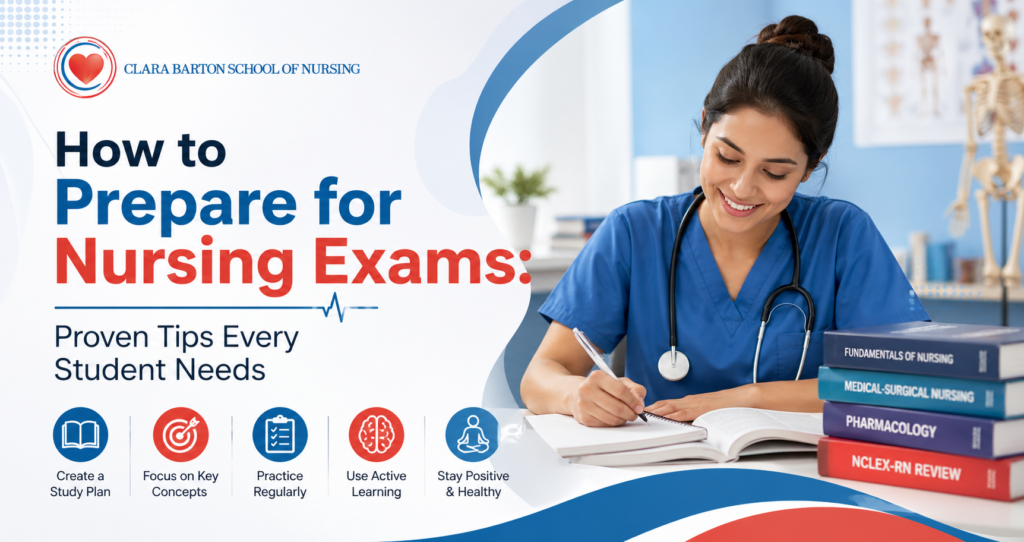
The problem arises from your insufficient effort to study. Your existing study methods enable you to pass nursing exams because you dedicate yourself to studying. Students who take nursing exams fail because they do not possess the necessary skills which these tests require. The focus of nursing exams lies on testing students’ ability to make decisions instead of testing their ability to remember information. The assessment evaluates a person’s skills in managing patient care through their capacity to choose which tasks to complete first and which issues to raise and which matters to hold back. Students who had previously performed well in their studies experienced difficulties because their study methods were constructed to support memory-based examinations. The methods which used to provide successful results now fail to work because people never explain why it happens.
Most Nursing Students Are Covering Too Much
The curriculum is enormous. Physiology, pharmacology, pathology, mental health, maternal-newborn, paediatrics, ethics, law, community health — and the instinct is to treat it all with equal weight.
That’s a mistake.
Nursing exams don’t test everything equally. Cardiac comes up constantly. Respiratory. Neuro. Pharmacology, particularly the high-alert medications. Maternal newborn. Mental health. These areas carry disproportionate weight and the students who know them deeply and know other areas adequately score better than students who know everything at a surface level.
Pick the high-yield areas first. Learn them properly. Then fill in the rest around that foundation. This isn’t cutting corners. It’s strategy.
How to Start Nursing Exam Preparation
Start by finding the exam blueprint. NCLEX test plan information becomes available to the public while course exams use syllabuses that show topic weight distribution. You should study the syllabus first before you start studying textbooks or preparation books or study groups because your study needs to match the test requirements. Students tend to begin their studies at the first chapter and complete all chapters until they reach their study time limit which prevents them from learning the most frequently tested subjects. The blueprint provides a complete guide for everything you need to know. Your destination becomes clear as you prepare to begin your journey. The first step involves answering a diagnostic set of practice questions that assess your knowledge of the topic. The assessment allows you to identify your knowledge gaps while recognizing your existing knowledge. Students believe that they study when they spend time reviewing familiar material, but this actually constitutes excessive time use.
What Is the Best Way to Study for a Nursing Exam
Study in a smart and simple way so learning becomes easier and stronger.
- Test yourself instead of only reading.
- Do 20 to 30 practice questions every day.
- Take your time and think before answering.
- Always read the explanation after each question.
- Learn why the right answer is right.
- Learn why the wrong answers are wrong.
- Even if you guess right, make sure you understand it.
- Do not study everything in one day.
- Study a little, then revise after a few days.
- Revise again after a week.
- Small, repeated study helps more than last-minute studying.
Keep it simple, stay consistent, and you will learn better every day.
The Six Principles of Nursing
The exam questions depend on six ethical principles which include beneficence, non-maleficence, autonomy, justice, fidelity, and veracity. The definition of each conflict between the two concepts which occurs when a patient declines treatment that the nurse believes to be necessary is explained through this information. The correct answer selection requires understanding this information which prevents guesswork.
The Study Group Question
Talking through a patient case out loud, explaining a drug mechanism to another person, debating which intervention takes priority is useful. Testing each other, catching gaps, building the kind of verbal reasoning nursing clinical work requires.
Sitting in the same room reviewing separate notes and occasionally asking each other questions is not a study group. It’s studying alone with more chairs involved.
If the group isn’t doing active case discussion, it’s probably not the best use of time.
Things Students Ask Right Before Exams
How should you start nursing exam preparation when you feel behind?
Start with the blueprint. Then study important topics first. Study other topics after that. Focus on one or two subjects like heart and lungs for a week. This helps more than studying everything at once.
Is anxiety before nursing exams normal?
Yes, it is normal. It does not mean you are not ready. Students who practice questions every day feel less scared because they get used to the exam style.
How early should you start preparing?
For NCLEX, start 6 to 8 weeks before. For class exams, study a little every week. Do not wait for the last day.
What makes some students pass while others fail?
Students who pass understand how the exam works before they start studying. This helps them prepare better.
Studying Hard Is Not the Same as Studying Right
Nursing school rewards a specific kind of preparation. Clinical reasoning built through daily practice questions. Deep knowledge of high-yield content. Understanding of the six nursing principles as decision-making tools, not vocabulary words. Spaced repetition instead of cramming. Active recall instead of passive review.
The students who figure this out early, not the week before boards, have a fundamentally different experience than the ones who don’t.
CBS Nursing is built around exactly this kind of preparation. The resources, the practice materials, the structure, all of it designed around how nursing exams actually work rather than how students assume they work. If preparation has felt more like covering ground than building confidence, that’s the gap CBS Nursing is designed to close.
Read More:
- Nursing College in Murshidabad
- Top Reasons to Choose CBS Nursing College in Murshidabad
- Is Nursing a Good Career Option? | Explore the Pros and Cons
Visit Us: