
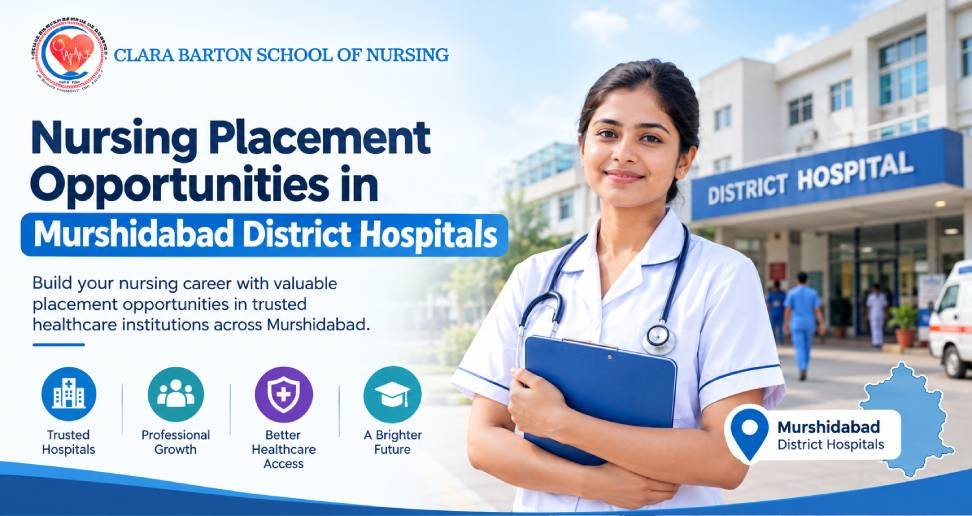
For nursing students and newly qualified nurses, finding the right placement opportunity is an important step toward building a successful healthcare career. Nursing placement opportunities in Murshidabad district hospitals can provide valuable exposure to real-world patient care, hospital procedures, clinical documentation, emergency services, and teamwork with doctors and other healthcare professionals.
Murshidabad, one of the important districts of West Bengal, has healthcare facilities serving both urban and rural communities. For nursing students looking to gain practical experience close to home, district hospitals and other healthcare institutions can offer opportunities to understand how healthcare services are delivered to a diverse patient population.
Understanding Nursing Placements
A nursing placement is a period during which nursing students or trainees gain practical experience in a healthcare environment under appropriate supervision. Classroom education provides the theoretical foundation, while clinical placement allows students to apply that knowledge to actual patient-care situations.
Depending on the nursing programme and institutional requirements, students may receive exposure to areas such as:
- General medicine
- General surgery
- Paediatrics
- Obstetrics and gynaecology
- Emergency care
- Community health
- Intensive care
- Operation theatre services
- Outpatient departments
- Inpatient wards
The exact departments available for placement can vary according to the hospital, nursing institution, programme requirements, and current administrative arrangements.
Why Choose Hospital Placements in Murshidabad?
For students studying nursing in or around Murshidabad, local hospital placements can be a practical way to gain clinical experience while remaining familiar with the regional healthcare environment.
One of the major advantages is exposure to different types of patients. District-level healthcare facilities often serve people from different communities and backgrounds. This can help nursing students develop communication skills, patience, professional behaviour, and an understanding of different healthcare needs.
Hospital placements can also help students become familiar with the daily responsibilities of nursing professionals. These may include monitoring patients, maintaining records, assisting with procedures, supporting doctors, administering medicines under supervision, and following infection-control practices.
Clinical Experience Matters for Nursing Students
The transition from classroom learning to clinical practice can be challenging. Placement experience helps students understand how theoretical concepts are applied in real healthcare situations.
For example, a student may learn about vital signs, patient assessment, infection prevention, and medication safety in the classroom. During clinical training, these concepts can be observed and practised under supervision.
Students may also learn how to:
- Communicate effectively with patients and attendants
- Maintain accurate nursing documentation
- Follow hospital protocols
- Work as part of a healthcare team
- Respond appropriately to changing patient conditions
- Follow hygiene and infection-control procedures
- Handle basic clinical equipment
- Maintain patient confidentiality
These experiences can contribute to greater confidence and professional awareness.
Types of Nursing Placement Opportunities
The availability of nursing placements depends on the institution and its affiliations. Students should therefore check with their nursing college or training institution before assuming that a particular hospital is accepting trainees.
1. General Ward Placements
General wards can provide students with broad exposure to patient care. Trainees may observe patient admission procedures, routine monitoring, nursing documentation, medication schedules, and discharge-related processes.
2. Maternal and Child Health
Placements related to obstetrics, gynaecology, and paediatrics can help nursing students understand the healthcare needs of mothers, newborns, infants, and children.
Students may gain supervised exposure to antenatal care, postnatal care, newborn observation, and paediatric nursing practices, depending on the department and training schedule.
3. Emergency Department Exposure
Emergency care provides an opportunity to understand how healthcare teams respond to urgent medical situations. Students can observe patient assessment, prioritisation, emergency documentation, and coordination among healthcare professionals.
Because emergency departments involve sensitive and rapidly changing situations, students must follow the instructions of supervising professionals at all times.
4. Surgical and Medical Departments
Medical and surgical departments can provide exposure to patients with different conditions and treatment requirements. Students may learn about pre-operative and post-operative care, wound management, patient monitoring, and recovery support under supervision.
5. Community Health Experience
Nursing education also includes understanding healthcare outside hospitals. Community-based training may expose students to health awareness activities, preventive care, maternal and child health programmes, and other public-health initiatives.
How to Find Nursing Placement Opportunities in Murshidabad District Hospitals
Students should begin their search by contacting their nursing college or training institution. Many formal clinical placements are arranged through institutional affiliations rather than individual applications.
Students can follow these steps:
Check your college’s hospital affiliations: Ask the nursing administration or placement coordinator which hospitals are currently available for clinical training.
Contact the hospital administration: If independent applications are permitted, contact the relevant hospital or nursing administration department to ask about current placement procedures.
Prepare your documents: Depending on the institution, students may need identification documents, nursing course details, college permission letters, photographs, academic records, or other documents.
Confirm eligibility: Ask whether the placement is available for GNM, B.Sc. Nursing, Post Basic B.Sc. Nursing, or another programme.
Understand the schedule: Confirm the duration, department allocation, working hours, supervision arrangements, and reporting requirements before joining.
Skills That Can Improve Placement Opportunities
Students can prepare for clinical placements by developing both technical knowledge and professional skills.
A strong understanding of basic nursing procedures is important. Students should also revise subjects such as anatomy, physiology, pharmacology, medical-surgical nursing, community health nursing, and maternal and child health.
Communication is equally important. Nurses regularly interact with patients, family members, doctors, technicians, and other healthcare workers. Clear and respectful communication can make a significant difference in the clinical environment.
Time management, punctuality, teamwork, observation, and willingness to learn are also valuable qualities during a placement.
What to Check Before Joining a Placement
Before accepting a nursing placement, students should understand the terms and responsibilities involved. Important points to confirm include:
- Whether the placement is officially recognised by the nursing institution
- Whether supervision will be provided
- The departments included in the training
- Placement duration
- Attendance requirements
- Required documents
- Dress code and identification requirements
- Safety and infection-control protocols
- Whether any certificate or evaluation will be provided
Students should avoid joining an arrangement without verifying its authenticity and educational relevance.
Building a Nursing Career After Placement
Clinical placement can be an important part of professional development, but it is only one component of a nursing career. After completing the required nursing education and registration requirements, candidates can explore employment opportunities in hospitals, clinics, diagnostic centres, nursing homes, community healthcare programmes, and other healthcare organisations.
Practical exposure can also help candidates understand which areas of nursing interest them most. Some may prefer medical-surgical nursing, while others may develop an interest in paediatrics, critical care, community health, or maternal healthcare.
For students searching for nursing placement opportunities in Murshidabad district hospitals, the best approach is to verify opportunities through their nursing institution and the concerned hospital administration. Requirements and availability can change, so current information should always be confirmed before applying.
Conclusion
Nursing placement opportunities in Murshidabad district hospitals can give nursing students meaningful exposure to clinical environments and help connect academic learning with practical patient care. From general wards and surgical departments to maternal healthcare, emergency services, and community health, clinical training can introduce students to many aspects of professional nursing.
Students should research placements carefully, confirm eligibility, prepare the required documents, and follow the guidance of their nursing college and supervising healthcare professionals. A well-organised clinical placement can help students develop practical skills, professional confidence, communication abilities, and a better understanding of the responsibilities involved in nursing.